Water and Sanitation Sector
Expanding access to clean water and safe sanitation
Water and Sanitation
Access to clean water is essential for community wellbeing. The availability of safe and reliable water sources is important to both urban and rural communities. Limited access to clean water and safe sanitation facilities, and limited opportunities for women in decision-making, remain common challenges for most of the rural population.
Water users in the villages depend on surface water sources such as springs, rivers and dams, as well as hand-dug wells or groundwater. Malfunctioning diesel pumps are common in rural areas, whereas water demand for both domestic and livestock use is high.
To address these challenges, CMSR-TZ, in collaboration with the respective District Councils and RUWASA, advocates for an integrated and participatory approach:
- Integrated WASH approach — recognising that competing demands for water and sanitation require holistic planning that balances community needs.
- Collaboration with stakeholders — partnering with government, NGOs, the private sector and networks to pool resources and expertise.
- Capacity building — equipping local communities with skills, knowledge and organisational strength to manage and sustain projects.
- Inclusive participation — ensuring women, youth and marginalised groups are actively involved in decision-making and project implementation.
Community Participatory Approach (CPA)
CMSR-TZ implements water and sanitation interventions through the Community Participatory Approach, ensuring that rural communities are directly involved in every stage of planning and implementation. By engaging both women and men, and empowering local capacity for village water and sanitation attendants and Community Based Water Supply Organisations (CBWSOs), CMSR-Tanzania secures sustainable access to water and sanitation services and empowers communities to take ownership of their future.
Community-level interventions
- Rehabilitation of existing schemes — upgrading boreholes (deep wells), distribution lines and construction of domestic water points.
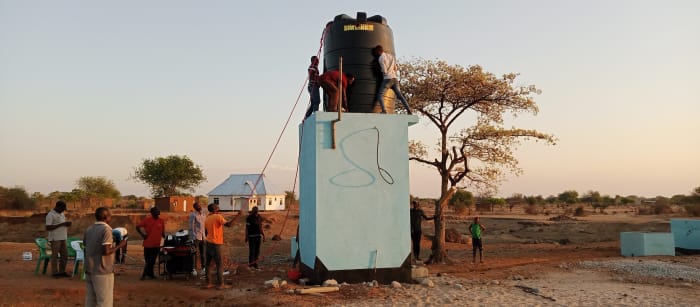
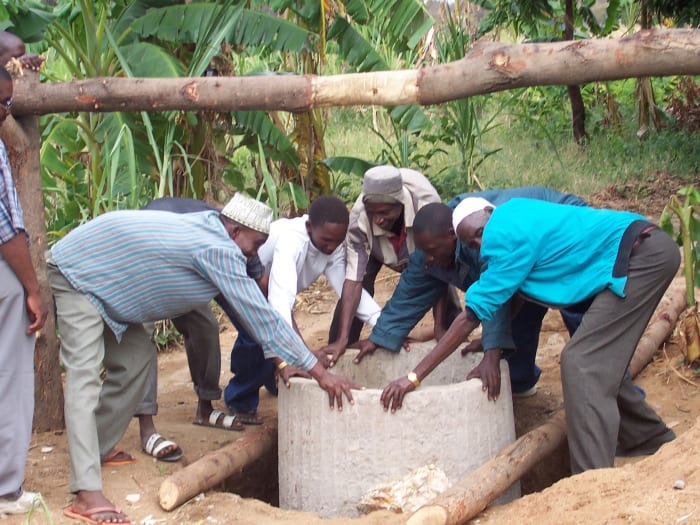
- Construction of new schemes — drilling boreholes, developing shallow wells with hand pumps, gravity schemes, water storage tanks and rainwater harvesting systems in public institutions.
- Capacity building — training Community-Based Water Supply Organisation members and water user groups to strengthen ownership and sustainability.
- Village water attendants training — equipping attendants with skills in operation and maintenance for effective management of improved schemes.
- Financial management support — building the capacity of CBWSOs to responsibly manage water schemes and the funds collected from water charges.
Why this matters
By combining infrastructure development, capacity building and community ownership, CMSR-Tanzania ensures that rural water and sanitation services are not only accessible but also sustainable and impactful in the long term.
Water and Sanitation projects
 Phase Out
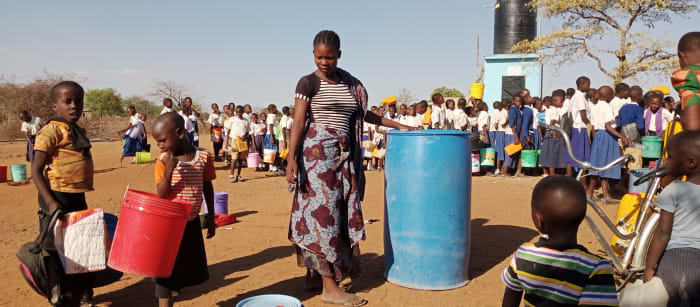
Improvement of Rural Water Supply — Rehabilitation of Borehole Water Scheme
 Phase Out
 Phase Out
 Phase Out
 Phase Out
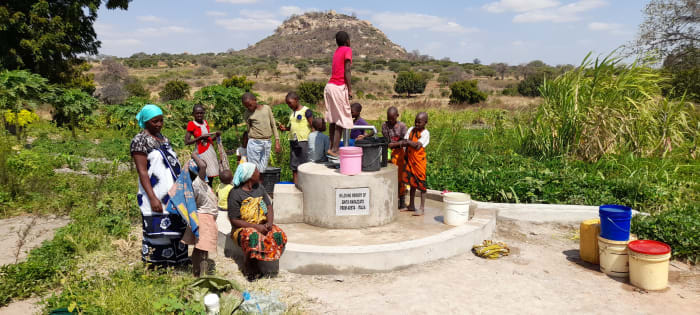
Construction of Shallow Wells
 Phase Out